Write a medical device service record the next engineer can use
An example of separating the reported problem, evidence, work performed and handover in a medical equipment record.
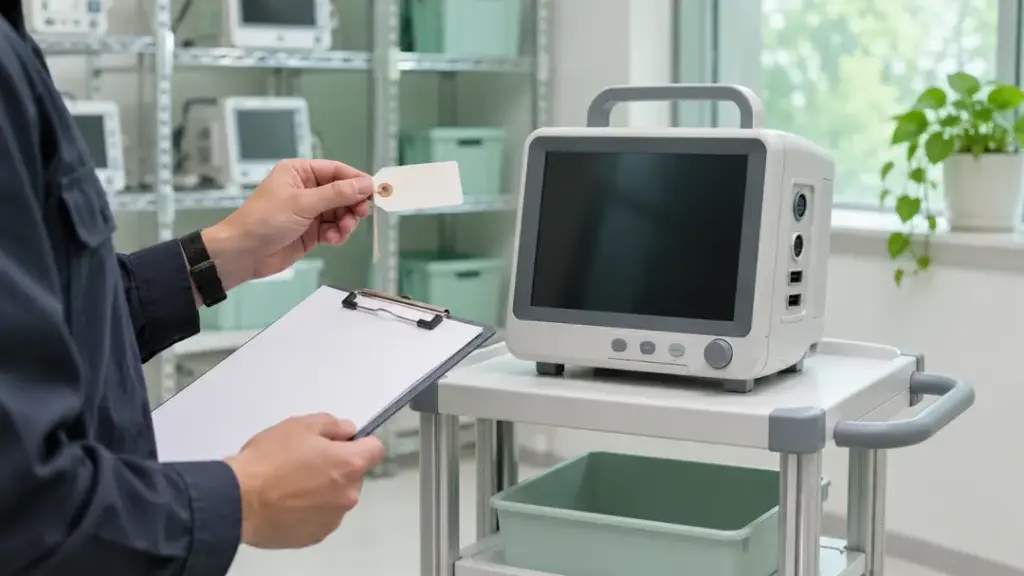
Two tickets for the same equipment say “checked” six weeks apart. A third engineer has to decide whether the same fault has come back. The word offers no way to tell what was reported, what anyone reproduced or what evidence accompanied the last handover.
Keep the service record attached to the equipment identifier. Give the reported problem, observations, work performed and disposition their own fields. The next reader should be able to tell which facts came from the service request and which came from the engineer who handled it.
Separate the account from the evidence
Consider a fictional equipment trolley with an intermittent power issue. A ward reported that the screen went dark while the equipment was disconnected from mains power. In the fictional ticket, the engineering team marks the symptom as reproduced during an approved bench check. Those two statements belong in separate fields. The account supplies the conditions seen by the ward. The observation says what engineering could reproduce. Neither identifies a cause by itself.
Suppose an engineer later attaches a service sheet and marks the unit as awaiting review. A ticket containing only “battery issue resolved” would imply a diagnosis and a disposition that the evidence does not establish. A suitable system can keep the link to the service sheet, the actual work status and the timestamp for the handover. A concise entry might read “Awaiting review. Service sheet attached. Follow-up assigned to the morning engineering desk.” If someone later authorises a change of status, the new entry should be attributable to that decision.
Test the handover in the software
Open the equipment record as the colleague who would answer the next call. Can that person locate the earlier ticket from the asset ID? Can they see what changed, which attachment belongs to the work, and who owns the follow-up? A search that returns a row of tickets titled “repair” has found a history, but it still makes a reader open every row to learn what happened.
Try the handover check on an ordinary completed ticket and on one that is still open. In the open ticket, see whether “awaiting review” is visible before the reader reaches the notes. In the completed ticket, check that the system can show the actual work and the disposition as separate facts. A single checkbox can be convenient for the queue and insufficient for reconstructing the record.
WHO’s maintenance-management guidance is useful context for inventory and work-order systems. It does not supply the local approval process or equipment-specific service criteria. Build the test around how your team records its decisions. WHO guidance on computerized maintenance management systems.
A good service note leads back to the right equipment and forward to the person responsible for the next step. If either link is missing, improve the software field or the handover prompt before asking staff for longer notes. What a useful equipment inventory keeps separate.